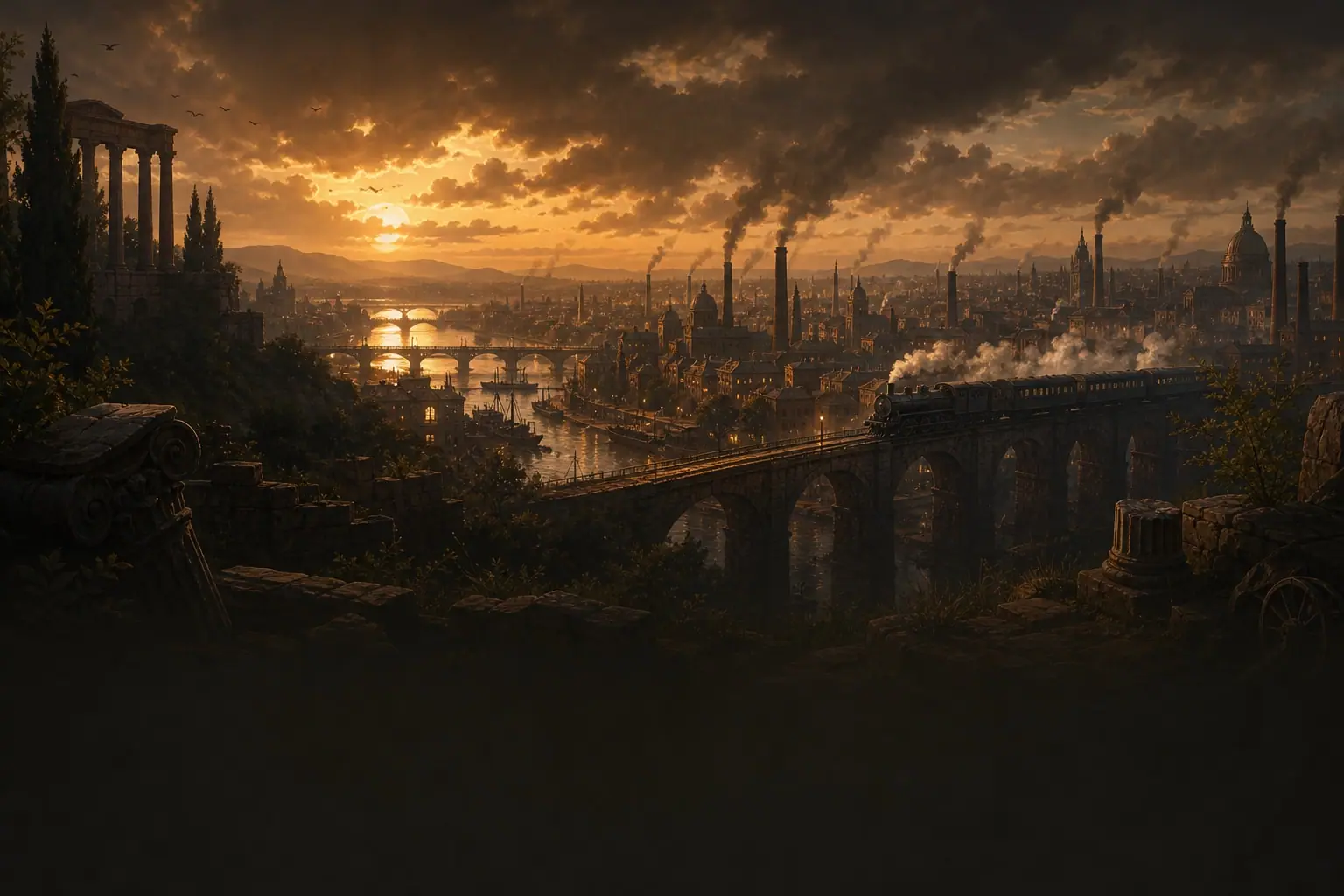
Course 6 of 9 · c. 1760 to 1914
The Industrial Age
Steam, steel and the cities they built
The Industrial Revolution and the world it made. Factories, railways and growing cities, the rise of nations such as Germany and Italy, the United States from expansion to civil war, East Asia's meeting with the West and the empires that industrial powers built across Africa and Asia.
6 modules · 39 lessons · a certificate of completion
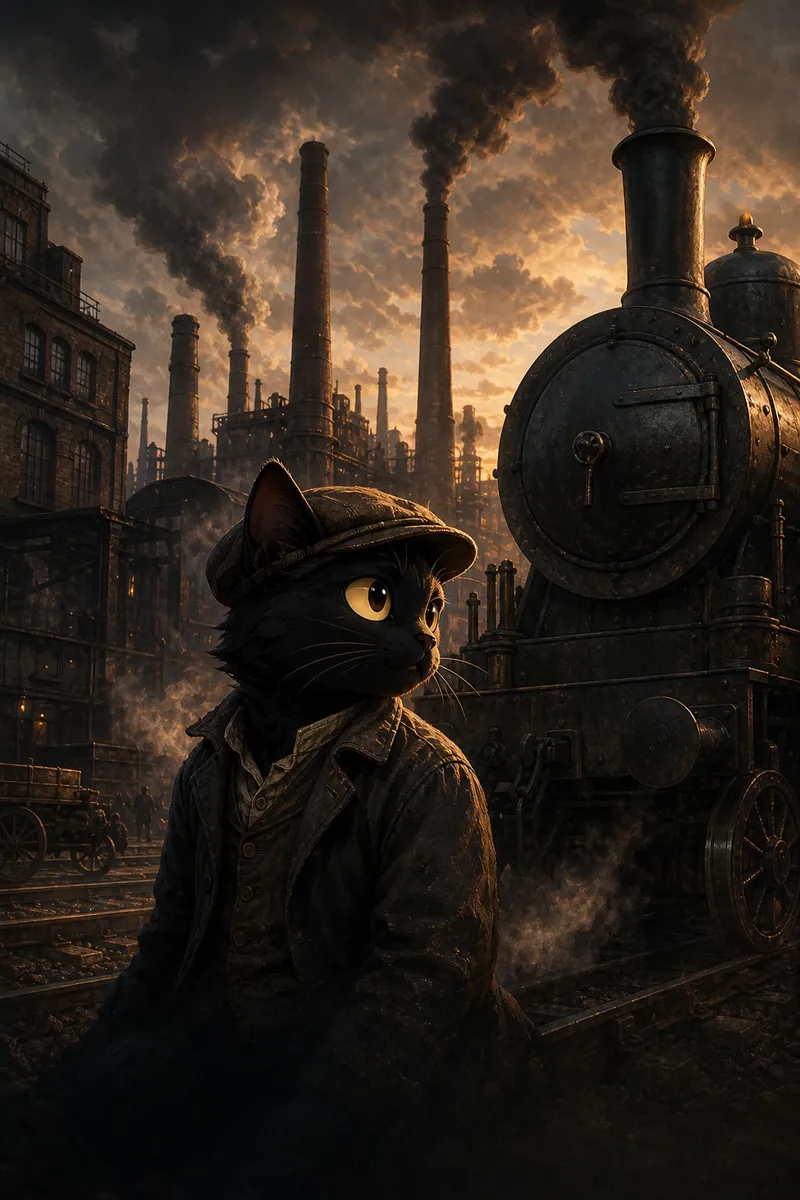
The period
c. 1760 to 1914, in a few lines
It began in Britain with coal, iron and steam. Within a century factories, railways and telegraphs had changed how people worked, where they lived and how fast news and goods could travel.
The same forces drove new nations such as Germany and Italy, a United States that spanned a continent and the empires that European powers built across Africa and Asia.

Moments that shaped it
Key events and turning points
1769
Watt's steam engine
James Watt patents an improved steam engine that soon powers mills, mines and, later, locomotives.
1825
The first public steam railway
The Stockton and Darlington line opens in northern England and shows what railways can do.
1853 to 1854
Japan is opened
American warships under Commodore Perry press Japan to end its long seclusion.
1861 to 1865
The American Civil War
The United States fights over slavery and the Union, and emerges changed.
1871
The German Empire is proclaimed
Germany is united under Prussian leadership, ten years after Italy became a single kingdom.
1884 to 1885
The Berlin Conference
European powers set rules for dividing Africa among themselves, without asking Africans.
What you will discover
What the course covers
In the 1700s and 1800s, steam, iron and factories changed how people worked, lived and ruled. This course follows the Industrial Revolution and the world it made.
- 1See why the Industrial Revolution began in Britain, from steam engines and textile mills to coal and iron.
- 2Walk through factories, railways and booming cities and see how daily life changed.
- 3Watch Italy and Germany unite as nations, and see how nationalism reshaped the map of Europe.
- 4Follow the United States from westward expansion to the Civil War, Reconstruction and the Old West.
- 5Cross to East Asia, where China and Japan answered Western pressure in very different ways, then see how European powers divided Africa.
Who it is for
- Readers who want to understand how the modern economy, cities and nations were built.
- Fans of American history who want the Civil War and the Old West in their world context.
- Students looking for a clear overview of the 19th century across Europe, America and Asia.
Why it matters
- Factories, railways and cities from this period are the origin of how most of us live and work today.
- The nations of Europe and many of the world's borders were drawn in this century.
- The Civil War decided the future of the United States and shaped the country that came after it.
- The empires built in this era explain many of the political and economic ties between continents that exist today.
No prior knowledge needed. Curiosity about how the modern world was built is enough.
Inside the course
6 modules and 39 lessons
This is the course exactly as it is in the app, module by module.
1The Industrial Revolution Begins7 lessons
- Why Britain Went First
- Adam Smith and the Rise of Free Trade
- Steam Power and James Watt
- The Textile Revolution
- Coal, Iron and Machines
- From Workshops to Factories
- Let's Review
2Factories, Railways and Cities7 lessons
- Booming Industrial Cities
- The Age of Railways
- The Telegraph and Other Inventions
- Industry Spreads Beyond Britain
- Criticisms, Unions and Karl Marx
- The Case for the Industrial Revolution
- Let's Review
3Nationalism and the Making of Nations6 lessons
- What Is Nationalism?
- The Revolutions of 1848
- Cavour, Garibaldi and Italian Unification
- Bismarck and German Unification
- Nationalism and Multi-Ethnic Empires
- Let's Review
4The United States: Expansion and Civil War6 lessons
- Westward Expansion
- The Road to Civil War
- The Civil War and Reconstruction
- Railroads and Native Peoples
- The Old West
- Let's Review
5East Asia Faces the West7 lessons
- China and the Opium Wars
- The Taiping Rebellion
- The Boxer Rebellion
- Japan Before Perry: The Shoguns
- Commodore Perry Opens Japan
- The Meiji Restoration
- Let's Review
6The New Imperialism6 lessons
- Why the Empires Wanted More
- The Scramble for Africa
- The Berlin Conference
- British Rule in India
- Life Under Colonial Rule
- Let's Review
Certificate
A certificate when you finish
Finish every module of The Industrial Age and you can issue its certificate of completion in the app, as a PDF with your name to keep and to share. Certificates are part of the Premium plan.
Certificate of Completion
This certifies that
Alex Morgan
has completed the course
The Industrial Age