Course 2 of 9 · c. 550 BCE to 476 CE
The Ancient World
The ideas that outlived the empires
The great empires and ideas of antiquity. Persia, Greece and Alexander, Rome from republic to empire, Han China and ancient India, the birth of the major religions and philosophies and the fall of the old empires.
6 modules · 42 lessons · a certificate of completion
The period
c. 550 BCE to 476 CE, in a few lines
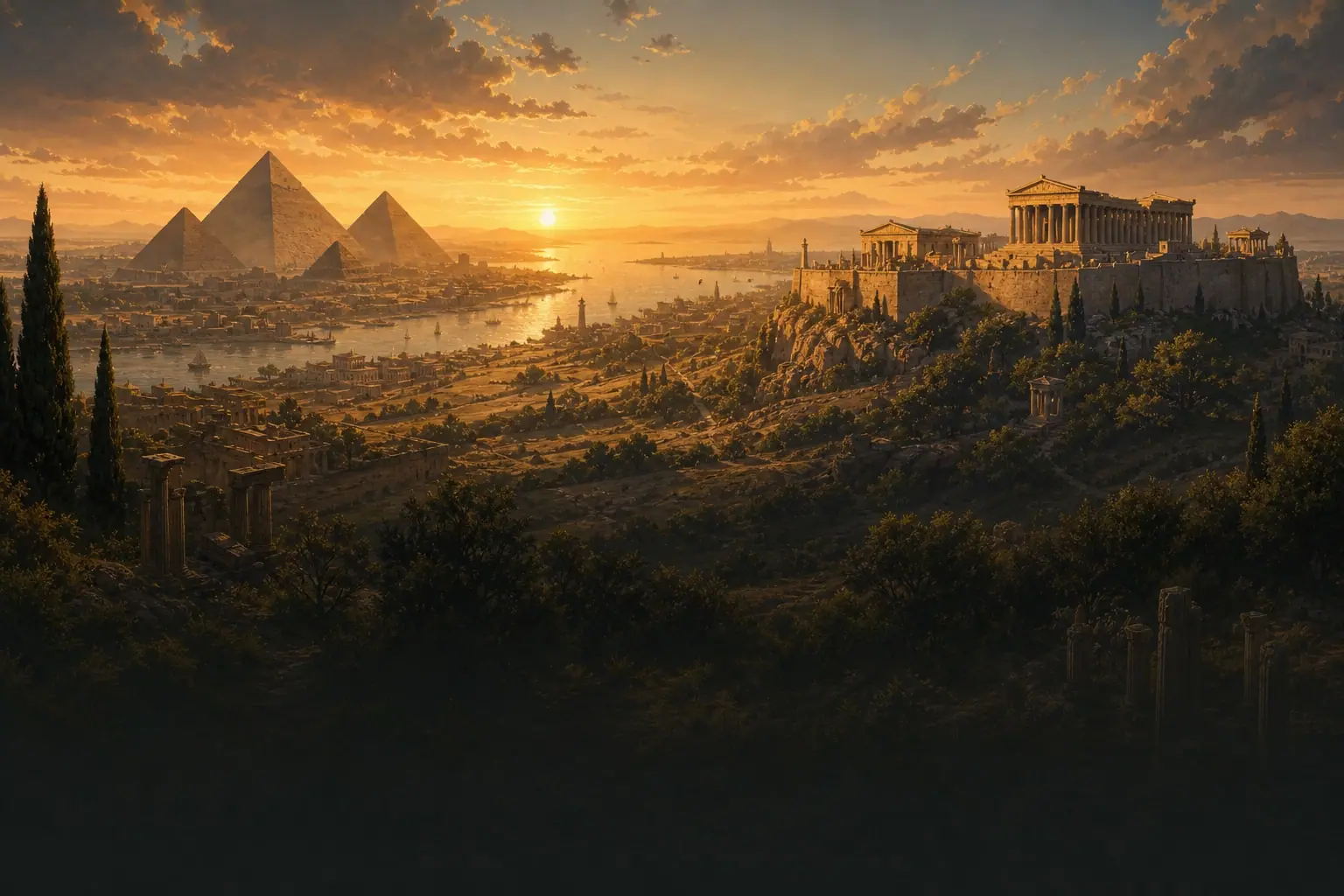
Persia, Greece and Rome built the first empires that reached across continents, while in India and China other great states shaped how millions of people lived and believed.
This course follows them from Cyrus the Great to the fall of the western Roman Empire, and looks at the philosophies and religions that spread along the way.
Moments that shaped it
Key events and turning points
550 BCE
Cyrus builds the Persian Empire
Cyrus the Great unites the Persians and the Medes and goes on to conquer Babylon, ruling the largest empire the world had yet seen.
508 BCE
Athens tries democracy
The reforms of Cleisthenes give Athenian citizens a direct voice in how their city is governed.
336 to 323 BCE
Alexander's conquests
Alexander the Great leads his army from Macedon to the edge of India and spreads Greek culture across three continents.
206 BCE
The Han dynasty begins
The Han emperors rule China for four centuries and open the Silk Road that links East and West.
27 BCE
Augustus becomes emperor
After a century of civil wars, the Roman Republic gives way to an empire that rules the whole Mediterranean.
476 CE
The western empire falls
The last western Roman emperor is deposed, the date traditionally used to mark the end of the ancient world in the West.
What you will discover
What the course covers
The ancient world gave us democracy, philosophy, law and some of history's largest empires. This course follows them from Persia to the fall of Rome.
- 1Meet Cyrus and Darius and see how Persia ruled the largest empire of its time with roads and governors.
- 2Watch Athens and Sparta rise, fight Persia and then each other and learn how democracy and philosophy took shape.
- 3Follow Alexander the Great from Macedon to India and see how Greek culture spread across three continents.
- 4Trace Rome from a small city to ruler of the Mediterranean, from Hannibal and Caesar to Augustus, the rise of Christianity and the fall of the West in 476.
- 5Cross to India and China to meet Ashoka, the Han emperors and the Silk Road and see how Buddhism and Confucianism spread.
Who it is for
- Curious adults who know Rome and Greece from movies and want the real story behind them.
- Students who need a clear thread through the empires and ideas of antiquity.
- Travelers heading to Greece, Italy, Turkey or Egypt who want ruins and museums to mean something.
Why it matters
- Democracy, republics, courts and many of our ideas about citizenship began in this period.
- Roman law, Greek philosophy and the great religions of Asia still shape how people think and live.
- The rise and fall of empires here shows patterns that return again and again in later history.
- References to Caesar, Alexander and the Spartans are everywhere and you will catch them when they appear.
No prior knowledge needed. If you have ever wondered how Rome rose and fell, you are ready.
Inside the course
6 modules and 42 lessons
This is the course exactly as it is in the app, module by module.
1The Persian Empire6 lessons
- Cyrus the Great Builds an Empire
- Darius and the Satrap System
- The Royal Road and Persian Life
- Zoroastrianism and Tolerance
- The Persian Wars Begin
- Let's Review
2Classical Greece8 lessons
- City-States and the Greek World
- Athens and the Birth of Democracy
- Sparta: A Society of Soldiers
- The Persian Wars: Marathon to Salamis
- The Golden Age of Athens
- The Peloponnesian War
- Socrates, Plato and Aristotle
- Let's Review
3Alexander and the Hellenistic World6 lessons
- Philip of Macedon Rises
- Alexander Conquers Persia
- To Egypt and India
- The Empire Splits Apart
- Alexandria and Hellenistic Culture
- Let's Review
4The Roman Republic7 lessons
- Legends and Early Rome
- How the Republic Worked
- Conquering Italy
- The Punic Wars and Hannibal
- The Gracchi and the Land Reforms
- Civil Wars and Julius Caesar
- Let's Review
5The Roman Empire and Its Fall8 lessons
- Augustus and the Pax Romana
- Daily Life in Rome
- Roads, Law and Engineering
- The Rise of Christianity
- Crisis of the Third Century
- Constantine and the Divided Empire
- The Fall of the West in 476
- Let's Review
6Ancient India and Han China7 lessons
- The Maurya Empire and Ashoka
- Buddhism and Hinduism
- The Gupta Golden Age
- China Unites: Qin and Han
- Confucianism and Han Government
- The Silk Road
- Let's Review
Certificate
A certificate when you finish
Finish every module of The Ancient World and you can issue its certificate of completion in the app, as a PDF with your name to keep and to share. Certificates are part of the Premium plan.
Certificate of Completion
This certifies that
Alex Morgan
has completed the course
The Ancient World